Business Storage or a Workshop: Which Do You Need?
A practical guide for Batley businesses storing stock, tools or equipment: when storage is enough and when you need a working unit.
Carlinghow Mills | October 20, 2026
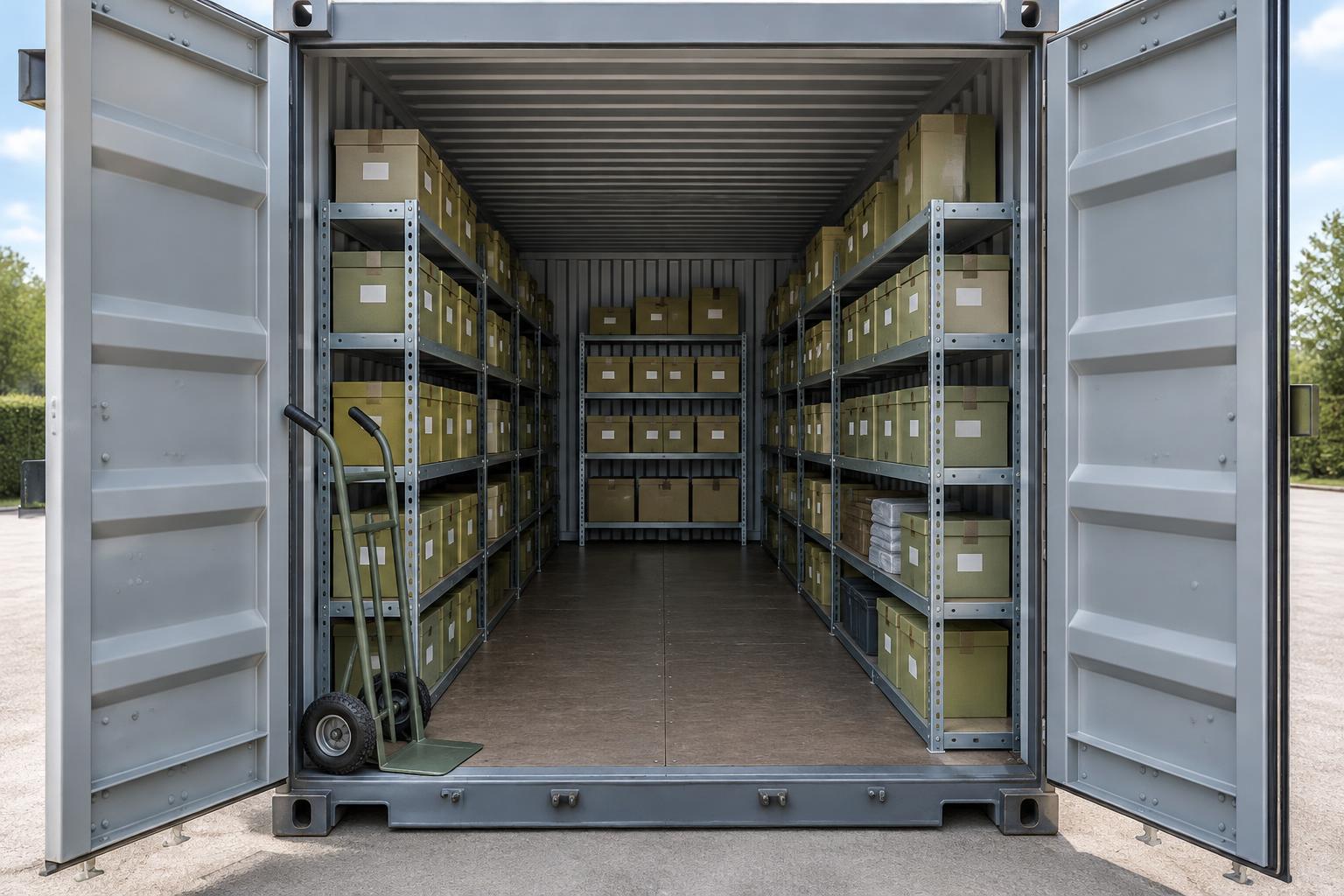
Business storage and commercial workspace solve different problems. Storage provides somewhere to keep goods between visits. A working unit may be needed when staff are regularly carrying out production, repairs, packing or customer-facing activity. Being able to store business stock does not automatically mean you can run every part of the business from that space.
For a Batley business deciding between container storage and a workshop, the useful question is not simply which is cheaper. It is what needs to happen on site, how often and with what equipment. Write down a normal working day before comparing the options.
When storage may be enough
Storage may suit a business that needs to hold tools between jobs, keep additional stock away from its main premises or manage seasonal items. If most of the work happens elsewhere and visits are mainly to collect or return goods, a dedicated working unit may not be necessary.
Check that the items you intend to store are permitted. Ask about access arrangements, loading, insurance and any restrictions on materials. If the goods need stable temperature or humidity, confirm the environment explicitly rather than assuming a container provides climate-controlled conditions.
When a working unit is more appropriate
If staff need to spend the day assembling products, repairing equipment or processing orders, assess the requirements of the activity as well as the stock. Lighting, power, ventilation, welfare arrangements and a safe layout can become essential to the decision.
A storage agreement should not be treated as permission to use the space as a workshop, office or shop. Explain whether you expect customers, suppliers or employees to attend. Confirm the landlord or operator's rules and any necessary permissions before choosing either option.
- Storage visits mainly involve collecting or returning goods.
- Regular working activity needs an assessment of services and suitability.
- Customer visits and deliveries should be discussed before commitment.
Plan around access and stock movement
Estimate the amount of stock held at the busiest point in your trading year, not just an average week. Shelving and an access aisle take up usable space. A unit filled from floor to door may hold the goods but make individual items difficult to retrieve.
Record the largest item, the type of vehicle used and the frequency of visits. Ask whether you can load close to the entrance and whether the access times suit your schedule. If goods arrive on pallets, confirm how they will be unloaded and moved; do not assume handling equipment is provided.
Storage and workspace at Carlinghow Mills
Lockr Storage operates container self-storage at Carlinghow Mills in Batley. Its listed 20ft container provides 160 sq ft of storage with drive-up loading and 24/7 customer access. Bookings, prices, permitted goods and the storage agreement are handled by Lockr Storage; check the current offer before booking.
Commercial workshops and other units at the estate are separate lettings. Their availability and terms should be checked individually. If you need working space rather than storage alone, send details of the activity, approximate size and services required instead of assuming a container will accommodate it.